
We recently reviewed one of Kobo's latest additions to the e-book or eReader market, the Kobo Libra 2, so this time it's time to focus on another addition, a mid-range/high-end e-book with which Kobo intends to strengthen its user base by offering different alternatives to its mid-range devices.
We're reviewing the Kobo Sage, a device with audiobooks and compatibility with the Kobo Stylus for a large eight-inch screen. We'll take a closer look at this new Kobo product and see if it can stand out in Kobo's lineup.
Materials and design: Rakuten Kobo's hallmark
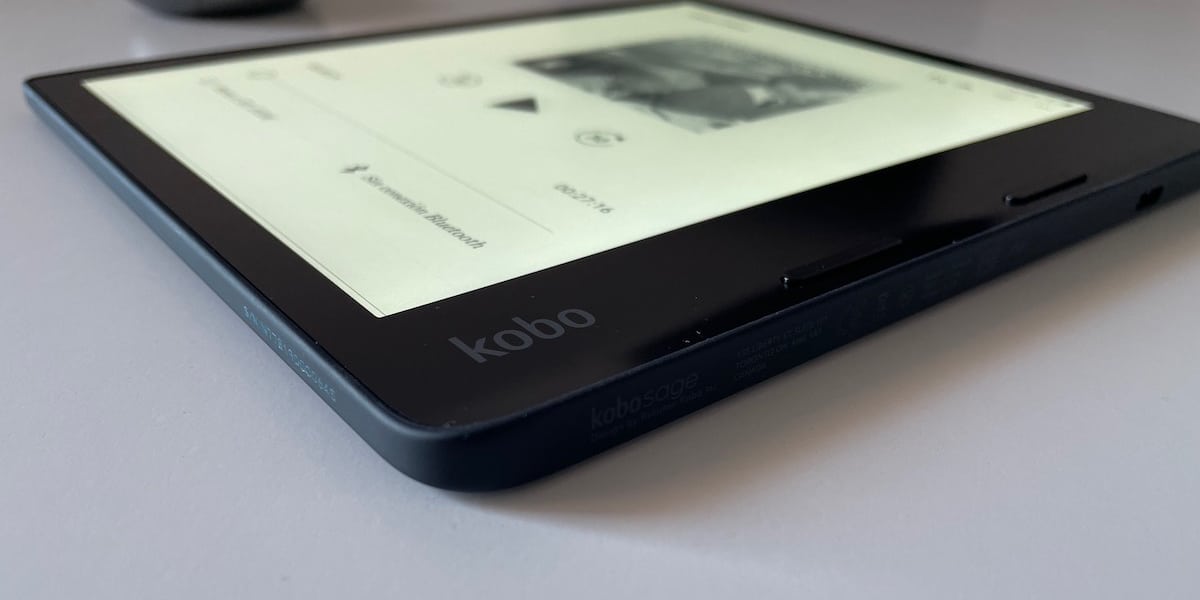
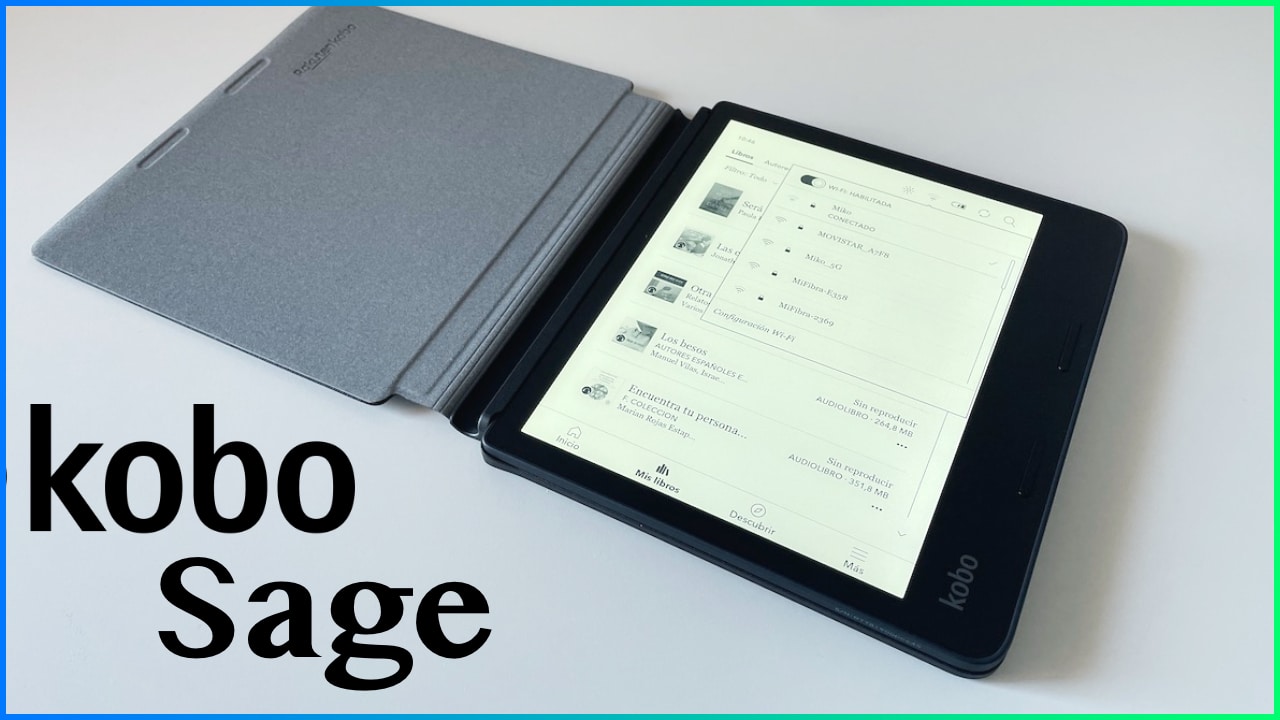
This time we are going to focus on what differentiates this Kobo Sage, and that is that at the moment no white alternative is offered, that is, we can only buy it in black. We have a prominent size of 160,5 x 181,4 x 7,6 millimeters for a total weight of 240,8 grams, we could say that the Kobo Sage is not small nor is it light, clearly it is a more complete device focused on the who do not only seek to read in back-and-forth circumstances, but rather opt for something more stable.

- Dimensions 160,5 x 181,4 x 7,6 millimeters
- Weight: 240,8 grams
We have the high-quality finish typical of Kobo, along with a soft, rubberized plastic. The back features a screen-printed geometric pattern, the power button, and the brand logo. The larger side houses the page-turn buttons, and one of the bezels is reserved for the USB-C port, its only physical connection. Once again, this Kobo Sage appears well-made, something the brand knows how to do to distinguish itself from the rest; it immediately feels like a premium product. Personally, I prefer somewhat more compact and lightweight devices, but this is how Kobo has chosen to respond to the needs and demands of its users.
Technical characteristics
Rakuten Kobo has opted for familiar hardware in this mid-to-high-end Libra 2, equipping it with a 1,8 GHz processor, which we assume is a single-core. This choice of greater power stems from the performance demands of integrating with the Kobo Stylus and the responsiveness the user interface must provide. Surprisingly, despite having better hardware, it feels somewhat slower than the Kobo Libra 2. It offers 32 GB of storage; once again, Kobo hasn't been stingy , providing ample capacity that will be difficult for eReader users to exceed and more than enough for the latest audiobook collections.
- Formats: 15 natively supported file formats (EPUB, EPUB3, FlePub, PDF, MOBI, JPEG, GIF, PNG, BMP, TIFF, TXT, HTML, RTF, CBZ, CBR)
- Kobo audiobooks are currently restricted to some countries.
- Languages: English, French, French (Canada), German, Spanish, Spanish (Mexico), Italian, Catalan, Portuguese, Portuguese (Brazil), Dutch, Danish, Swedish, Finnish, Norwegian, Turkish, Japanese, Traditional Chinese.
In terms of connectivity, we now have three options: WiFi 801.1 b/g/n, which will allow us to access 2,4 and 5 GHz networks; a new Bluetooth module whose version we haven't been able to find out; and finally, the classic and versatile USB-C port. As with the vast majority of Kobo devices, this Sage is also water-resistant, specifically with an IPX8 rating, for depths of up to two meters for a maximum of 60 minutes.
A large screen accompanied by the Kobo Stylus
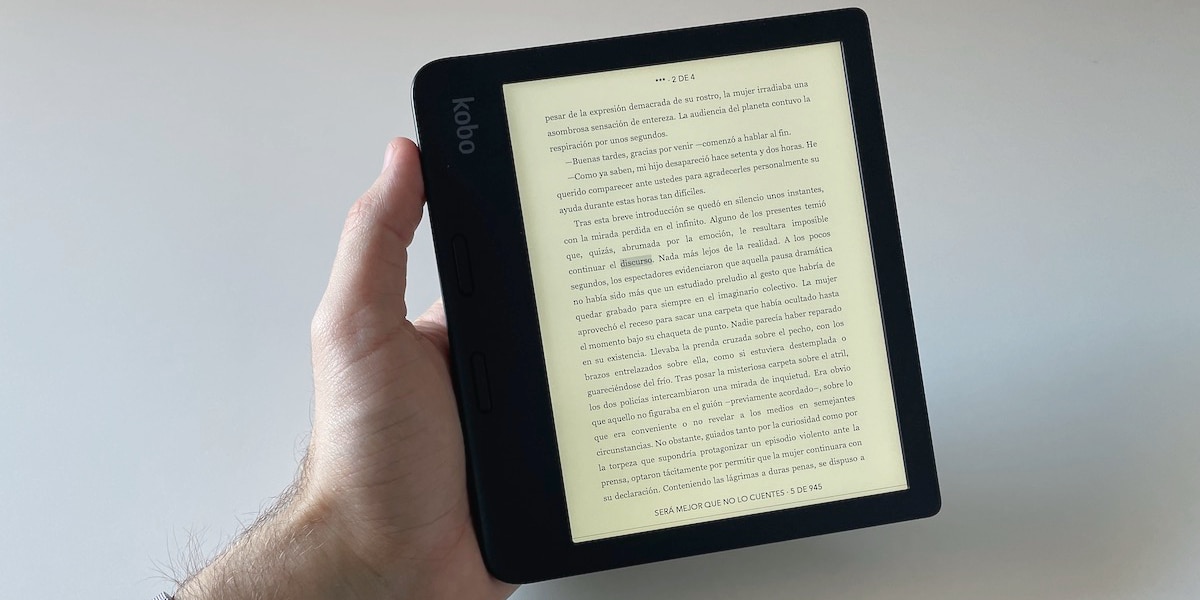
Otherwise, the Kobo Sage features an 8-inch E Ink Carta 1200 high-definition panel, achieving 300 pixels per inch with a resolution of 1449 x 1920. There's little to add about this panel, which we've already tested on other devices from the brand and which ranks among the top e-ink panels in both responsiveness and power consumption. The refresh rate remains an area for improvement, but an unavoidable one.
The Kobo Stylus, for its part, has a replaceable tip and is pressure-sensitive, offering fairly accurate results despite the input lag inherent in an e-ink screen. It features two dedicated buttons with different functions on the stylus itself, allowing you to edit PDFs, create your own personalized notebooks, and even write directly on the book you're reading. It's worth noting that it's battery-powered, and we were able to test this in our review of the Kobo Elipsa; however, we haven't been able to verify its functionality in this edition of the Kobo Sage.
We say hello to audiobooks
We have several options when connecting our Bluetooth headphones: either play an audiobook, which will bring up a pop-up window for headphone settings, or go to the new Bluetooth connection section located in the settings menu in the bottom right corner of the Kobo Sage's user interface. It also works with external speakers.
- Modify the headphone volume
- Modify the playback speed of the book
- Advance / Rewind 30 seconds
- Get book and index information
The system is still in its early stages; it would be great if we could continue listening to a book from the exact point where we left off reading it, and then resume traditional reading where we left off in the audio version. However, it's a software technology that Kobo is still working on, and it's left us wanting more.
The PowerCover makes the battery almost infinite
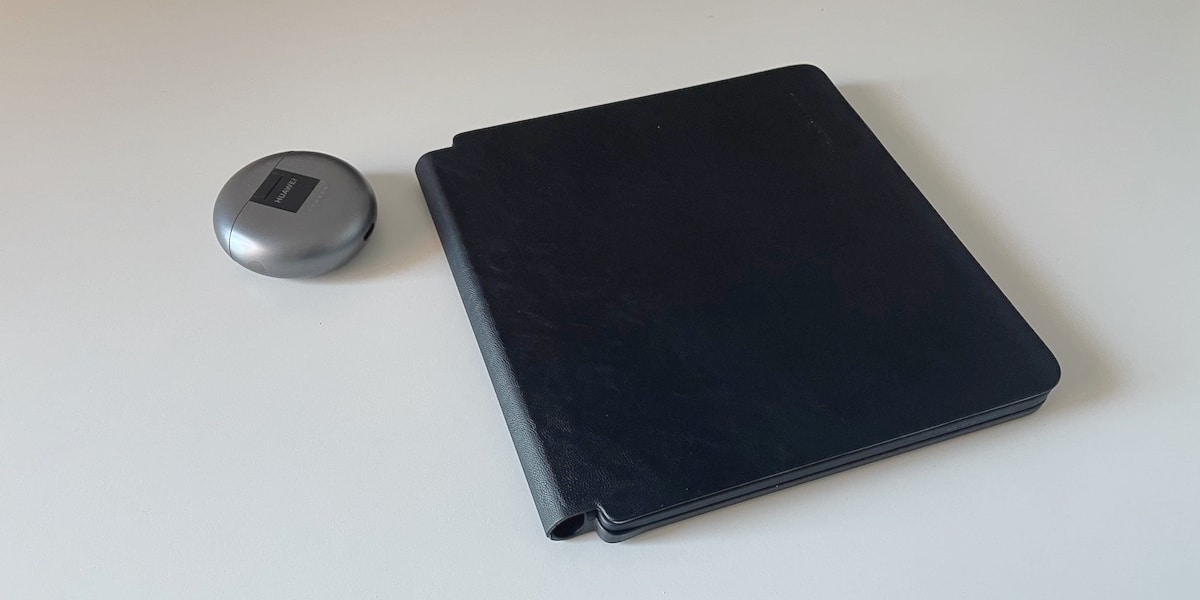
This Kobo PowerCover is in low demand, so if you were thinking of buying it, you'll have to get in line or go to your nearest Fnac ( €79,99 ). However, it's not a device designed for the average user. It has a stand for the Kobo Stylus and significantly increases the thickness and weight of the book because it houses a battery.
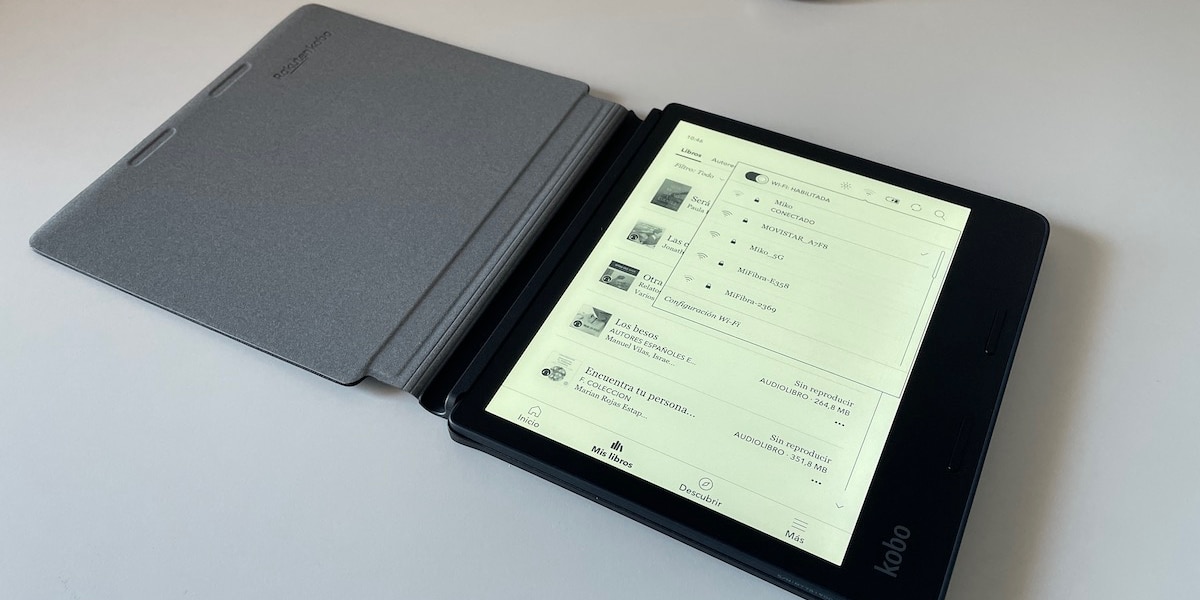
It installs automatically using magnets, and we don't know the exact mAh capacity of the case. It's excellently finished and only comes in black. Also, for obvious reasons, it includes an automatic sleep/wake function. It's a product designed for those who will be constantly using the Kobo Styus; I'm a big fan of the SleepCover.
Editor's opinion
- Editor's rating
- 4.5 star rating
- Exceptional
- Sage
- Review of: Miguel Hernandez
- Posted on:
- Last modification:
- Screen
- Portability (size / weight)
- Storage
- Battery Life
- Automotive Lighting
- Supported Formats
- Connectivity
- Price
- Usability
- Ecosystem
Pros and cons
Professionals
- With Bluetooth and Stylus
- Screen that meets popular demand for size
- Good refresh rate and Menu 1200 features
Cons
- It does something big to me (it's subjective)
- I miss white version
- They should polish the UI to move it faster