

An electronic book is a digital file containing a book or a published work. It's commonly called an ebook, a name derived from the English term "electronic book." Initially, the term "ebook" was often used interchangeably with "devices capable of reading electronic books," and this confusion is compounded by the numerous acronyms surrounding ebook formats. Currently, few people know exactly which formats are compatible with Kindle, an electronic book reader considered by many to be the best.
Not all e-readers can read the same formats . Typically, each manufacturer includes one or two proprietary formats in addition to the more common, non-open formats. Among these common formats, the most prominent are EPUB, the open-source ebook format, TXT, PDF, and DOC. Regarding the proprietary formats included by major manufacturers, it usually depends on the company, but they are all derived from and modified from the EPUB format. The drawback is that if you buy an ebook from a bookstore, unless you have a free format copy, you won't be able to read it on a reader from another bookstore.
These limitations are particularly noticeable in the case of Amazon, whose Kindle readers only support a limited number of ebooks, four of which are Amazon's own formats . These formats are Kindle Format 7, Kindle Format 8, MOBI, and PRC . These formats are either updates, like MOBI or Kindle Format 7, or they are based on the standard Epub format. Kindle Format 8 is a good example of the latter. But let's examine these formats in more detail.
The Kindle Format 7 or also known as AZW

This Kindle format is an improved version of the mobi format. In 2008, Amazon acquired Mobipocket, along with all of the company's patents and products. While this wasn't a large sum, it included what Amazon valued most: ebook format patents, specifically the mobi format. The mobi format attempts to adhere to the OpenBook standard , which is based on the XML web standard. After the acquisition, Amazon adopted the format, respecting all its rules and functionality, and implemented its own DRM (Digital Resource Management) software, which restricts ebook use to a specific account or device for commercial purposes. This is how Kindle Format 7, or AZW, was born.

With the passage of time, Amazon eReaders evolved and with them the software and the formats that they could play, this is how we could see the Kindle Format 8.
The Kindle Format 8 or AZW3
It was an evolution of Kindle Format 7; it no longer simply contained the MOBI format plus a DRM layer, but was something more. Kindle Format 8, or AZW3, is an ebook that follows the EPUB3 standard , to which it adds DRM, and is also appended to an AZW or Kindle Format 7 file for compatibility with devices that read the older format. When the MOBI and Kindle Format 7 formats were created, the standardization of the EPUB format was still in its infancy and somewhat confusing, so Amazon didn't venture into this format until the arrival of AZW3. AZW3 doesn't fully utilize the power of HTML5, as it doesn't support some newer tags and continues to use some obsolete ones. Furthermore, it doesn't fully comply with the CSS3 standard; some elements, such as the fixed background layer, violate CSS3.
Kindle Mobi format
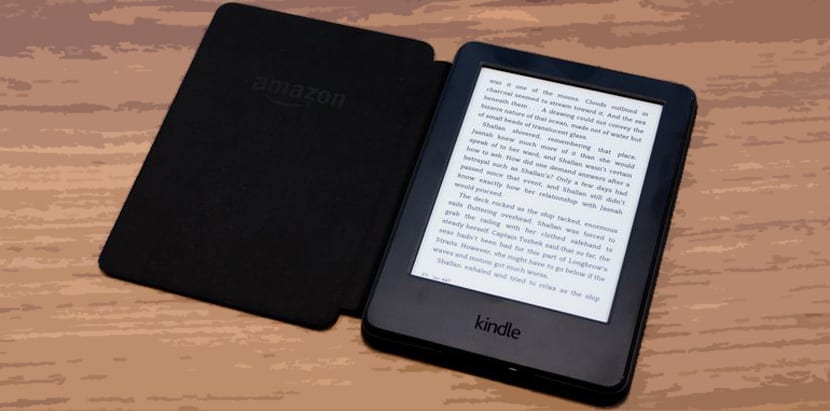
Along with these Kindle formats, Kindle eReaders also support the mobi format, although it represents the oldest part of Amazon, this format continues to exist and Amazon continues to support it in its eReaders. Of course, only the format that is DRM-free, as specified by Amazon. Still DRM-free Mobi has several layers of protection since its creation by the company Mobipocket represented the second ebook format they created.

PRC
The first of those formats that Amazon acquires with the purchase of the company and that it has transmitted to its readers is the prc format. The prc is a simple format very similar to the mobi format but without its layers of protection, so that currently all readers who read the mobi format can usually read the prc format. It is very rare to see ebooks in this format, at least the most current ones, but since there is no systematic conversion of the Kindle catalog, it is necessary to keep this old format in the readers, at least for reading old ebooks.
In addition to its own formats, Kindle devices also support other formats owned by third parties or licensed under the GPL . Among these, PDF stands out. While not strictly an ebook format, it works very well for reading. PDF belongs to Adobe, and its acronym, Portable Document Format, refers to its key feature: portability. Although Adobe is the primary developer of this format, in 2008 it released it as an open source, joining the International Organization for Standardization and thus becoming an open format. This made both the PDF format and its portability work very well on Amazon eReaders; however, the screen size, currently smaller than 9,7 inches, makes reading difficult for some people. Initially, this was addressed by creating a larger Kindle, the famous Kindle DX, but this eReader was soon abandoned in favor of alternative methods such as converting PDF documents to EPUB format or simply optimizing the PDF to the screen size.
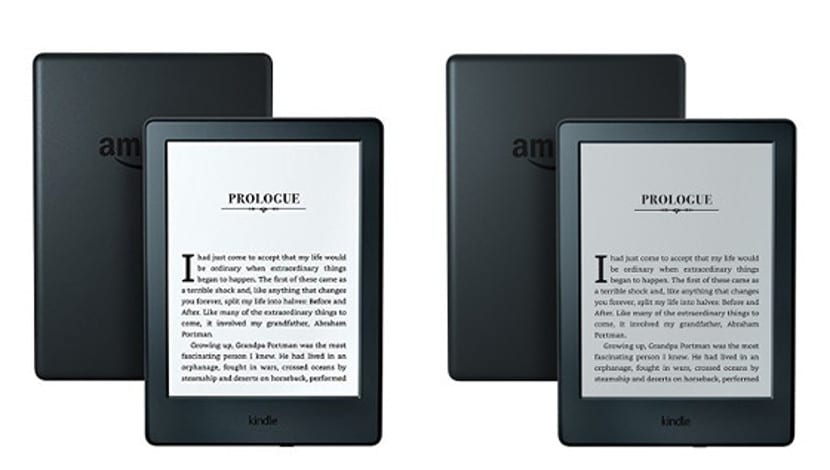
The Kindle also supports older formats, such as TXT and HTML . TXT is the simplest format in the computing world. Many of us have worked with this format; it's the format used by Windows Notepad. However, reading a document in this format, like a book, is now a difficult task because it doesn't support basic text formatting or editing options.
The second of the formats, html, is the format used on the Web and can be read by any browser. There are currently five versions of this language. Kindle eReaders are only capable of reading the first four formats, the last one, html5, is only partially able to recognize, since its standardization is very recent. Although it is a more compound format than txt, html is not an ideal format for reading ebooks. Reading this format allows us to view web pages on our kindle and to navigate through a basic browser that Amazon has introduced in their devices. However, this will not allow us to read documents that are embedded in other web technologies such as flash or certain aspects of javascript.
The latest Kindle readers have incorporated support for reading DOC and DOCX formats . These formats, produced by Microsoft Word, are a viable alternative to ebooks created in TXT format. Unlike TXT, DOC and DOCX documents allow us to have a book edited and pre-formatted for reading. However, these two formats are not intended for ebooks, so their use presents several drawbacks for any reader. One of these drawbacks is file size. If we look at the size of ebooks in AZW and AZW3 formats, it's not very large, usually barely exceeding two megabytes. However, an ebook in DOC or DOCX format can be up to three times larger, making it more difficult for the Kindle to manage and use.
The electronic ink eReaders, that is, the Kindle, can also reproduce images, although they are not in color, if the contrasts and the change in tonality can be appreciated. This in the latest Kindle, which has the latest electronic ink screen technology and also a high resolution, is very well appreciated. If what we want to see are images on the Kindle Fire, in addition to the above we have the opportunity to see the images in color. Image formats are many and varied, but no Kindle can read all formats. The good thing about this is that Amazon has taken care so that its readers can read the most popular formats of images. Thus, the image formats that it will support are jpg, png, bmp, gif.
The ebook formats that Kindle Fire read
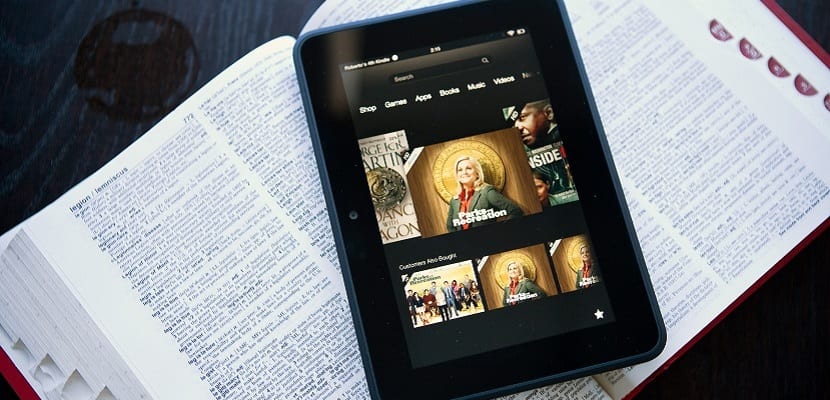
Kindle Fire devices could be considered the second generation of Kindle readers, although no one calls them that. The Kindle Fire family of devices is essentially a tablet, but its software is very much geared towards readers; so much so that even the screen size of the available devices has been chosen to provide greater comfort for the reader.
The Kindle Fire carries at its heart a version of Android customized by Amazon itself, such an operating system is called FireOS. In general, it could be said that being a tablet and having Android, the Kindle Fire could support any format, however Amazon from the first model has been able to install any app from the Play Store, so we can only read the formats that Amazon tells us unless we tamper with Amazon software.
At first, as we buy our Kindle Fire and turn it on, we can read any of the ebook formats that we have mentioned above, but we can also read other multimedia formats that, although not related to an ebook, will be very helpful to know when using interactive ebooks.
In recent months, Amazon has added the Audible service to its ecosystem. This has made devices that have a non-electronic ink screen able to play audio formats, especially the formats of the audible app, which is aax.
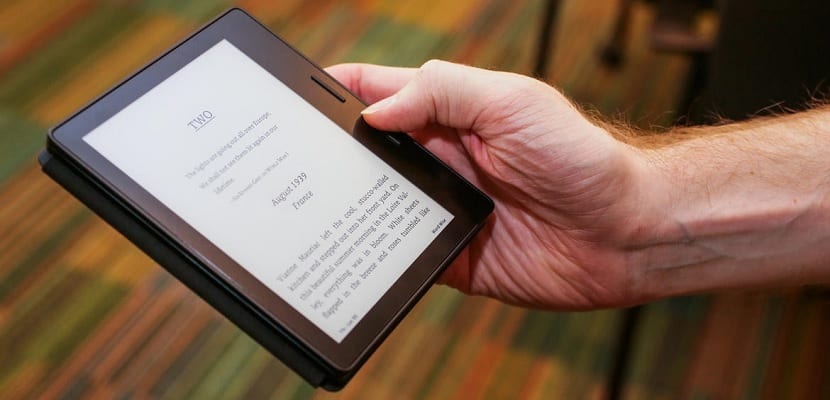
Audible is one of the new formats Amazon has introduced to its LCD or color display devices. These devices are more powerful than eReaders, allowing them to support a wider range of formats, not only those commonly used for ebooks but also formats that provide access to video, audio, and more comprehensive web browsing.
Among the video formats, mkv and mp4 stand out, although they also read 3gp and vp8 (webm). Within the audio formats, in addition to the aax format, they are also capable of playing the mp3 file, the OGG file, a free audio format that can be the equivalent of mp3 and classic files with a WAV extension.
As we have said before, we can alter the software of the Kindle Fire, either by adding apps with an apk or by hacking the tablet. In the second case, Amazon is not responsible for the guarantee, so it is not recommended to do it to get an ebook read in epub format, but in the first case, it can be done and it will allow us to add new ebook formats such as the format Epub. This will be recognized by our Kindle Fire if we install apps like Aldiko or FbReader. These apps can be found in the Google store, in the Amazon store and even on their website, so obtaining is simple and installation is easy to do. Once the app is found, we save it on the tablet and mark the option to "install from unknown sources" which will allow us to install any app we want.
These are, broadly speaking, the Kindle formats that Amazon eReaders support, and I say broadly speaking because we haven't gone into the very technical details that would confuse the average reader who just wants to know if they can read the ebooks they already have on a Kindle.
We hope that with all this information, you now have a clearer understanding of which formats Kindle reads, but if you have any questions, leave us a comment.
Table of Contents